Monday, September 17, 2007
Londonium Exodus

Tuesday, September 04, 2007
The (Neo) Cons
Thursday, May 31, 2007
A Frank Hawk
This is a classic I haven't read yet. The young girl hidden from the Nazis in an Amsterdam warehouse... I think she spent, with all her family, two years just to be captured and die in a concentration camp.
The diary of a youn girl
By Anne Frank
Published by Puffin
427 pages.
I read this book almost 20 years ago when at university. Now I am reading it again, in paperback. I remember being totally hooked and amazed with Hawking's prose plus the weird feeling about this titanic mind in such a fragile body. I think he is the Newton of 21st century... but maybe someone can say this is a too high title.
A brief History of Time
From the Big Bang to Black Holes
By Stephen Hawking
Introduction By Carl Sagan
Published by Bantam Books
220 pages
An African Hero
IN 1998, as the telecoms boom was under way, Mo Ibrahim was amazed that big companies were rushing into the mobile-phone business around the world, yet not in Africa. There they saw only problems: poverty, unrest and corruption. Mr Ibrahim, a veteran of the telecoms industry in Britain and Sudan, was at the time running a consultancy he had founded in London. Amid the cigar smoke and snifters that followed its directors' dinners, an idea formed. Might it be possible to set up a pan-African mobile operator—and to do so without paying bribes?
This was the genesis of Celtel, which is now one of Africa's largest mobile operators, with some 20m subscribers in 15 countries.When Mr Ibrahim sold Celtel in 2005 to MTC, a Kuwaiti operator, for $3.4 billion, it demonstrated that the continent was open for business. Rather than charity, he insists, “the way forward for Africa is investment.”
Building businesses in Africa is important to Mr Ibrahim, who had to leave the continent as a young man in order to pursue his career. Born in Sudan and raised and educated in Egypt, he started off as an engineer at Sudan's national phone company. After further study in Britain he went on to become technical director at Cellnet, the wireless arm of BT, Britain's biggest telecoms operator. (Cellnet was subsequently sold, renamed O2 and is now owned by Telefónica of Spain.) He left in 1989 to set up an engineering consultancy that designed mobile networks, and sold the firm for just over $900m to Marconi in 2000.
These experiences paved the way for Celtel's emergence. The consultancy enabled Mr Ibrahim to peer into the business models of dozens of mobile operators, from which he concluded that an African operator would work. His time at BT was also informative: big companies, he says, teach a fellow everything he ought not to do in order to be successful. “Later on in life I was not worried about taking on the big guys, because you know they are not efficient,” he says. And Mr Ibrahim's previous success meant that the motivation behind Celtel's establishment was not solely commercial. He and his co-founders had already made their fortunes and regarded Celtel as a political and intellectual test. That is why they happily ventured into risky African markets and refused to pay bribes.
Now that mobile telephony is booming in Africa, Mr Ibrahim has other plans. Not for him the typical rush into private equity. Instead he set up a foundation last year with the novel (and, say critics, utopian) mission of promoting good governance in Africa. It plans to award an annual prize of $5m to retired African leaders who rule well and then stand down, rather than trying to cling to power. The foundation is working with Harvard University to establish a scoring system with which to assess potential candidates. The prize committee is chaired by Kofi Annan, former secretary-general of the United Nations. The first award will be presented in October, though the prize will be presented only in years when a worthy winner can be found. By that point Mr Ibrahim plans to have stepped down as the chairman of Celtel to avoid any possible conflict of interest.
Meanwhile Mr Ibrahim has also put up $150m to establish a fund to invest in African businesses. From its newly opened offices in London, the Africa Enterprise Fund will seek out promising companies in financial services, consumer goods, energy and agricultural processing. The aim is to focus on established businesses that need cash and experienced management to grow, and the average investment is expected to be around $20m. Only companies that can expand their operations regionally or throughout Africa will be considered. Mr Ibrahim has appointed Tsega Gebreyes, Celtel's former strategy chief, to help run the fund. This is because the fund's approach is to apply the Celtel formula in other fields: identify inefficiencies, consolidate fragmented operations, go pan-continental and develop a respected brand. The goal is scale. A large company that operates in several African markets can attract a higher calibre of managers than a gaggle of local ones, and can have more political clout when demands for bribes crop up.
Politics, philosophy and economics
Though there are no direct links between the foundation and the fund, the two are symbiotic. Business and investment in Africa can succeed only if there is good governance, which is what the foundation is intended to promote. And economic development is necessary in turn to give people a stake in improving the political process. The foundation's $5m prize is a pittance, it is true, when compared with the spoils that can be extracted by staying in power. But the initiative may not be totally futile: given the impotence of Africa's intergovernmental bodies it will do no harm at all to produce an annual public ranking of African governance. And the foundation will offer a carrot where other non-governmental organisations carry sticks.
The investment fund is also tiny when set against the magnitude of Africa's problems. But as Celtel shows, some businesses can have a powerful ripple effect, promoting economic activity and generating new investment. Celtel employs around 8,000 people directly, for example, but it and other mobile operators indirectly provide jobs to around 170,000 people in Africa who resell prepaid airtime. More broadly, mobile phones also promote entrepreneurship and economic activity by widening access to markets and making up for poor or non-existent transport infrastructure. Similar ripple effects ought to be possible in other fields such as financial services and energy.
Thirty years ago Mr Ibrahim had to leave Africa for Europe in search of education and professional success. He hopes that fostering indigenous African companies will help ensure that tomorrow's engineers and entrepreneurs can find their opportunities closer to home.
Tuesday, May 22, 2007
In Fact...
- ...rents in central Manchester are 40% higher than in central Manhattan.
- ...if all Lego in the world were divided up evenly, we would get 30 pieces each.
- ...Lauren Bacall and Shimon Peres are first cousins.
- ...there are half a million semi-automatic machine guns in Swiss homes.
- ...Australia emits 30% more greenhouse gases per capita than the United States.
- ...the porcentage of Nigerians living on less than a dollar a day has risen from 32% in 1985 to 71% today.
- ...Mao Zedong had a hairdresser called Big Beard Wang.
- ...Israelis own 10% of the private land on the moon.
- ...of India's 1.1bn population, only 35m pay income tax.
- ...Europe's merchant ships emit around a third more carbon than aircraft do.
- ...when Hitler invaded the Soviet Union, his army used more horses in total, and more per soldier, than did Napoleon's over 100 years earlier.
Friday, May 11, 2007
Hot, Cold, Warm
Scotland was on Thursday, then Sunday came and the conservative Sarkozy won the French elections, with a 53% of the share, against Royal’s 47% - she moved fast in recognizing her opponent’s victory. That was the “cold water” for any progressive soul in the Hexagon and in Europe in general. The son of emigrants who called “scum” to other son of emigrants is now the president of France.
And on Tuesday, came the hopeful picture that everyone was expecting: Ian Paysley senior (“Mr Never!”) and Martin McGuinness laughing together in the power-sharing Stormont government. If the darkest voice of Unionist supremacy and a former IRA commander can work together for a better future for the people of Ireland I don’t understand why in other European conflicts they can’t find the right formula with much less difficult parameters.
Friday, April 27, 2007
So many books, so little time...
The Stories of Raymond Carver.
Picador.
447 pages.
The Foundation – A great American secret.
How private wealth is changing the world.
By Joel L. Fleishman.
Public Affairs.
357 pages.
The Shadow of the Sun
By Ryszard Kapuscinski
Penguin
325 pages
Intelligent but blind?
“The EU has a plethora of other agencies, as well as the Luxembourg-based European Investment Bank, the world’s biggest multilateral borrower. Among the more puzzling are two Brussels-based advisory bodies: the Economic and Social Committee, which brings together the “social partners”, and the eponymous Committee of the Regions. Between them they cost some 150m Euro ($200m) a year to run, and nobody can remember what they are for. But this being the EU, nobody dares to scrap them either.”
I like The Economist. I think it’s a serious, well informed, quite fair and truly liberal product. Having said that, the above paragraph shows very well the no-so-nice face of the magazine’s background ideology. Mainly two points to comment here:
Every human group has a religion, in a broad sense. For some people is their god, for others their culture or language, for others is race or ethnic group. The Economist has its own religion, the biggest god in Anglo-Saxon societies: the almighty Market. Fair to say that historically the so-called Left has showed a narrow-minded attitude towards the potentiality of the market, underestimating it. But you can go to the other extreme and think, as The Economist does, that the market will solve every single problem in any society at any time. Is in this ideological context where we should place the arrogance showed by the magazine snubbing a body which encompasses the social partners of any society. Do they really think it is viable to solve gross basic problems without counting, for instances, with unions, employers associations and main social movements like the green or immigration charities? What kind of democracy has The Economist in mind where they say things like that? The classical XIX c one with just a vote every 4 years and a Parliament who thinks knows everything?
The other shameful point is the description they do of the Committee of the Regions. It seems The Economist think it’s useless and should be scraped. I won’t argue that at the moment this body is quite a flowerpot and empty shell but I would say that the right step is to give this (or another similar body) more powers and not less. Why? I know what some people will say immediately, this body is not representative as their members are not elected. True, but it seems that is not the only organ which has this illness in the EU, and some very serious people don’t criticize those other bodies. The Economist shows here the typical blindness of any group of people who, being members of a big ethnic group (in this case English, with the UK state of their own) don’t see the need of any kind of representation for sub-states national realities. They think these organs are not needed and are just a waste of resources. Wrong, dead wrong. With this point of view, looking at any national claim like a “romantic” posture you will never understand the deep frustrations that some small minorities accumulate after years of cultural and linguistic colonization (some of them gentle, some of them brutal). With this arrogant attitude you will never understand what’s going on in Wales, Brittany, Scotland, Corsica, Ireland, Catalonia, Frisland, Galicia, Quebec, Basque Country or Belgium, which is falling apart in a very polite way. Collective identity issues are one of the main reason behind a range of conflicts.
Tuesday, April 10, 2007
Amazing...
By Ignacio Ramonet
The Poles call it the law of lustration, a term meaning ritual purification; the word has strong connotations of repentance and penitence in Poland, where history and Catholicism are so closely intertwined.
Under the law, which was passed last October and entered into force on 15 March this year, 700,000 Poles are required to confess any collaboration with the communists between 1945 and 1989. All senior civil servants, university professors, lawyers, headmasters and journalists born before 1972 must now confess their past sins by 15 May.
They must all fill in a form and answer the question: “Did you secretly and knowingly collaborate with the former communist security services?” The forms must be handed to their immediate superiors, who will forward them to the Institute of National Memory in Warsaw, which will check its records and issue a certificate of political purity. Journalists employed in any public service will be dismissed automatically if they collaborated. Anyone who refuses to answer the question or who is proved to have lied may be banned from their profession for 10 years.
This mad law, which is causing uproar in the European Union, makes the McCarthyites of the United States in the 1950s look like amateurs at the practise of anti-communism. It is the main feature of a witchhunt launched by the authorities after the conservative president, Lech Kaczynski, and his twin brother, prime minister Jaroskaw Kaczynski, came to power in Poland in October 2005.
Many Poles consider the law to be unconstitutional because it requires citizens to prove that they did not do something. It may be quashed by the Constitutional Court, which will deliver its verdict in May.
The ruling rightwing, Catholic and nationalist coalition (the Kaczynski brothers’ Law and Justice party, the agrarian Self Defence party and the League of Polish Families) is pursuing a disturbing policy of tough enforcement of moral values. Roman Giertych, deputy prime minister, minister of education and leader of the League, has just tabled a homophobic bill, causing more international uproar and protests from human rights organisations. Under the bill, which could be presented within a month, any person disclosing their homosexuality “or any other sexual deviation” in a university or scholastic establishment would be liable to a fine, dismissal or a term of imprisonment.
The minister’s father, the League MEP Maciej Giertych, caused protests in February when he published an antisemitic pamphlet, paid for by the European parliament and issued under its logo, containing such statements as “the Jews create their own ghettos” and “antisemitism is not racism”.
These anti-communist purges and attempts to reimpose an authoritarian moral order in Poland — and also to some extent in Ukraine, Lithuania and other countries formerly in the eastern bloc — conceal a worrying nostalgia for the period before the second world war, when racism was blatant. Some of those caught up in the current wave of revisionism go as far as extolling collaboration with the Third Reich against the Soviet Union.
The idea, so popular with the media, that Putin’s Russia is merely a covert extension of the old USSR inspires the spirit that prompted Warsaw to agree to instal on Polish territory the anti-missile shield designed by the Pentagon to protect the United States. It did that without deigning to consult its partners in the EU and Nato. Which goes to show that paranoia in politics can lead not only to spiritual atrophy but also to a special form of treachery.
Thursday, March 29, 2007
EuropAZ
Arsène Wenger and Thierry Henry's exercise in footballing elegance (with barely a British boot on the pitch) would hardly be possible without Europe's open transfer market
B is for borders
During a journey from Belgium to Luxembourg to France to Germany to Poland a passport had to be shown only once and then cursorily
C is for climate change
27 governments have just agreed the most ambitious package ever to tackle global warming. If the US, China, and India followed suit, the future would look less bleak
D is for democracy
dictatorships in Spain, Portugal, Greece and all over eastern Europe are in the dustbin of history
E is for the euro
On trips across much of Europe, travellers no longer have to change currencies and no longer come home with a pocketful of useless coins
F is for flights
Stag parties in Prague? Shopping in Barcelona? How could we afford it without the cheap airlines enabled by deregulating European air traffic
G is for Germany
Until anchored in the EU, Germany caused untold grief to most of us
H is for homebuying
The British mania for that place in the sun is a result of the EU requiring members to open their housing markets to foreign EU citizens
I is for international clout
Europe's sum is greater than its parts when it comes to making a difference internationally
J is for jobs
Working anywhere in Europe is now easy and occurring on an unprecedented scale
K is for Kosovo
The biggest challenge. EU is preparing to steer the province to independence in its first such mission
L is for London
As Europe's pre-eminent financial centre, the City of London has benefited enormously from the single market
M is for market
The single one of goods and services has been a boon for European consumers
N is for nationalism
It ain't what it used to be
O is for openness
What the EU has done best in expanding from an original six to a current 27 countries
P is for peace
Don't take it for granted in the continent that gave us Auschwitz.
Q is for queueing
Less and less of it on the borders between EU countries
R is for regions
Remote and poorer areas of Europe benefit from structural funds that amount to a great social democratic exercise in wealth redistribution
S is for soft power
if the EU's so bad, why does everyone else want to join?
T is for transport All of Europe is being knitted together by road and rail infrastructure projects
U is for unification
In 2004, when eight post-communist countries joined, made Europe whole (nearly), democratic, and free for the first time ever
V is for variety
From Krakow to Florence to Edinburgh to Seville, no union has ever comprised such splendid diversity
W is for welfare
The European social model cushions the effects of globalisation
X is for xenophobia
National prejudices start to break down the more the citizens of Europe mix and meet
Y is for yard
Europe encouraged all countries to unify measuring systems
Z is for Zimbabwe
Robert Mugabe and his henchmen are barred all over Europe, at British insistence, but only because Britain is in the EU
Tuesday, March 20, 2007
Lees?
"I will drink life to the lees!"
And I didn't understand what "lees" mean.
To be honest, more than four years later I haven't looked in the dictionary the exact meaning of the word but I understand perfectly the philosophy behind the concept, that's for sure.
Friday, December 22, 2006
Jupiter
Jupiter was always an especial person, different in the nicest way; blonde with curly hair wasn’t the everyday thing to be honest. Neither was very usual to have the entire collection of the British Encyclopedia… in English, at home. I remember his dad, John, reading all these newspapers and weekly culture and politics magazines and thinking that that was weird… till we ended up doing the same thing few years later.
I remember Jupiter coming over our place every weekend after lunch, while I was trying to do the washing up… I would finish just in time for the evening cinema film. We would sit in the kitchen sofa and watch the after lunch TV film and chat about this and that. We would offer anything to him and Jupiter’s answer always would be “No, thank-you-very-much” – that was a nicety in our time as the rest of kids used to grab whatever we were offered!
Jupiter was for me…well, Jupiter. I remember thinking why everyone would say that he was so clever… older people try to be nice, you know, I would think. With time I would realize how naturally intelligent that boy was… I never saw him bringing any school book for the weekend. They lived in the big-big city, so far and so foreign, linguistically, in values and in everything! When the rest of us were struggling with the next exam, he would be just hanging around, half bored, or just trying to explain us whatever we couldn’t understand from school lessons.
We grew up together, half friends, half brothers. So different but always so close. More than once I thought how wonderful person would be the mix of his good qualities and mines (I used to say that I was everything he wasn’t and he was everything I wasn’t) but I suppose that would be a little Frankenstein, not a real person. The fact is that we do admire each other… for being the exact opposite to ourselves!
Do you know a lot of people who picks the basic of a language just watching TV in this language? Nope, neither do I, just one. Or someone who ends up in an elite foreign university because his school marks were the top of the top? Just one, him. Or someone who has been a translator, university teacher, travel guide and a hippy all together? Not a big bunch, I suppose.
He went to the Big Apple and in bloody three months was a tourist guide, explaining to locals the history of their own city! I visited him there and I met one of the most interesting cities in the planet. A bit rough too, of course, but it’s part of the game, isn’t it?
Dad departed some years ago. I remember smokey and bony uncle dancing the same salute dance but in such a different way. I remember Jupiter with the flag in his chest, after in the piazza bar. Just flashes.
We have been together in so many projects. Talking about films in the radio, doing things for the magazine, setting up the fiesta bar every year in the street or the huge restaurant with some shorts and a T-shirt. Or just meeting in the local café every Saturday morning with coffee and lots of paper… a weird bunch. I remember him saying “everything was under control” then getting late to a key doctor appointment J when health was an issue and I remember him also in a van and buying some wine, in another key part of my life. I also remember both of us discovering something called “pizza” because we didn’t hook any girl and didn’t know what to do – the rest of friends did!
The lowest point was (my shame) when we were going to the old city and I critised his driving… he was ready to drop me there, in the middle of nowhere! Road rage, I suppose J
And now is mum Mary who has left. Hats off my friend as I don’t know a lot of people who has spent a year and a half like you, looking after old nice Mary. As the Tarot woman said, she is going to meet her important man, your dad. And I was happy when I heard that. And I am sad but at the same time, I am happy for you my dearest friend. At this very moment the funeral is going on… and I am with you.
Tuesday, November 14, 2006
From Pain To Power
Then, you start working. Bloody hard.
There are not magical recipes. You chat with friends, ask for advice, you read this book, you listen this talk and, above all, you chat with yourself: what happened; why; is a coincidence that it happened now? Is surprising the reaction of your loved ones? Etc. In a few weeks/months I have put together some bits and now they are my little commandments, maybe ten, maybe more. Is just a draft as I will always be changing and improving it. But mine. Hope you like it.
- Self-focused: You are your best friend. No one else can be the centre of your life. Enjoy being with yourself, believe you are an amazing person. Because you are.
- Time: The past is gone; we can’t see the future. The now is the only time we have. Enjoy the only real time, the now.
- Space: Keep your mind where your feet are. Don’t put yourself where you are not physically. Enjoy the only real space: the here.
- Focus: concentrate 100% on what are you doing. Make the most of the moment, the place, the activity or the person in front of you.
- Give: giving is wonderful, the more you give the more full you feel. Generosity attracts. But do not expect anything in return.
- Ask: when needed, asking for help, advice, support… is good, is human and is what we need when we are the lowest. Appreciate what you have received.
- Freedom: freedom (ours, other’s) attracts, you are there because you want not because you are forced; control, on the other hand, scares and puts others off.
- Compare: do not compare immeasurable realities; appreciate what you are. You are as good as any other, and remember: all of us have our holes in the same place!
- Humble: Humbleness and humility are key. We are no more than others.
- Balance: be balanced in all vital fields like work, relationships, body, etc. You want to keep an internal balance inside each field and also among them.
- Fear: it’s a matter of perception; it doesn’t matter what is out there, is how you perceive it. Feel the fear… and do it, anyway!
- Patience: a massive virtue. Learn the art of managing time. Use it before taking any decision, for example.
- Shoes: Put yourself in other’s shoes and see the world from there. You will understand others better doing that.
- Language: language is a powerful tool; a positive concept transmits positive energy; using negative ones we feel down and with negative energy. Remember that the words we use are like mirrors of our mind.
- Relate: Relations (family, friends, partners) are like plants, water them often in order to keep them healthy, fresh and green. Don’t take anything for granted in a relationship, no-one and nothing is forever. We owe no-one.
- Inner peace: or, in other words, Happiness. What you want to achieve.
Tuesday, October 03, 2006
Happy
That’s the name of one of my best friends, Happy.
We have been together practically all our lives, we could say that we are family. We love each other a lot because, I suspect, we are very similar and very different at the same time.
I love her name, Happy, bright and original. Wasn’t very easy to put this name to little babies at that time, not at all, I can tell… southern European niceties, you know? It sounded soooo foreign to them. Poor guys, they are still learning.
One of the first memories I have is about me being the junior partner among older people, bigger people. We would have art lessons in the evening, with that amazing blind man who saw more than anyone then we would start running and pressing all the ring buttons in our way, calling and running away, calling and running away… wild fun! “Who is it, who is it??!!”. Then, in front of the perfumes shop we would start playing those kind of games that are too basic and too boring for an adult to explain but you’d play it as it wouldn’t be any tomorrow.
I was smaller, and slower, and any other …-er you can imagine. So I was caught very fast and they I would try to catch the others but they had all the –er’s, in the opposite direction: they were faster, bigger, smarter… so after a while Happy would play in my place and would ask me to run faster and to be smarter. I tried.
You are a teenager when you see yourself arguing with your mum and later asking to yourself what the hell was the real reason to do so… tricky times. Ah, and you start locking the toilet door (a new experience in our, other way, hippy house). I remember Happy knocking the toilet door and asking if I had something made of gold… it made me smile and, since then, I didn’t lock the door again. Not consciously at least. We were a very natural triangle, Happy, Smally and myself… friends who were half brothers or brothers who were very good friends, either way. Friendship, tricky to define. Family, on the contrary, is easy: is blood, which is thicker than water. And stays.
Happy, one of the most talented person I know in a very natural way, wasn’t showing it off at all. Even being relatively young it was very clear to me that Happy needed to exploit this amazingly strong and easy personality in a way. A high career was tried, wrong step and suffering. After a dangerous transition a much sensible step was tried and then I saw Happy radiating her name, studying, living, working and exploring new fields in life. Geographically close, vitally visiting Pluto.
Happy is an interesting mix of sharpness and kindness; rudeness and softness; diplomacy and bluntness. This is not a word-game, trying to be balanced or a cool description. I really mean that, I don’t know any other person who can be both things at the same time in a more genuine way, in a more natural way. Well, except maybe Tony Blair the only person in this planet who can be relaxed and tense at the same time. But if there is an adjective that describes the soul of Happy, that’s generosity, in all senses. Monetarily, I don’t know how she does it, I think she found what alchemists have been looking for generations but she is not selling the formula. In other fields, she just does the right thing. Anyone who knows her can tell that. Really remarkable.
Tuesday, September 05, 2006
A Present To My Friend
I remember it was snowing the first time I went from your place to my place thru the Village. And I discovered the Village, thank to you. Then was Lord Of The Rings in the old cinema of Walthamstow. Now it’s closed.
You showed me the most interesting parts of London, Hampstead – the heath and the creperie, Grenwhich, Blackfriars, the Turkish restaurant!
We got drunk together more than once, you loved good whiskey, I showed you Martini. And ever since I have seen a bottle of vermouth in your house.
Gina and piano are synonyms.
I always loved listening you playing the piano. I used to be by the next sofa, just watching and listening, usually half drunk, especially on parties when after some drinks I couldn’t understand “a shit”.
My English was ok but I remember struggling trying to keep the path of the conversation around the table. Then it got better and better, thanks to you basically, and to Mel and to Jonathan. Good proof of my linguistic improvement are the golden sentences such as “ If I am forced”, “Sorry my English!”, “I don’t understand a shit” and, thanks to Bella, “permanent siesta”.
Then the Hammersmith walk came.
I remember not knowing if I’d find anyone in the house and Mel opening the door, just with a towel and full of foam, from the bath. I remember the feeling of finding an oasis. And also a never again feeling. And we talked by phone the very same night and you just recognized my cracky voice, “Hey, it’s me”. And I crossed the city, for a week, in your bike. That was crazy, but I did it.
You showed me what love and friendship means to you, many times. I think I showed mine when you stayed in the hospital.
You are piano, and also are forest, of course.
What a luxury having this amazing forest just ten minutes away where we used to live. It’s weird to talk about Walthamstow in past tense. I really loved our last stroll thru the forest, just last Sunday. Maybe it’s enough for today, I am getting nostalgic.
Friendship can’t be described with a logical script. There are flashes. And arguments!
We love you babe. I love you. And we miss you. Zoixonak, laune!!!!
Saturday, May 27, 2006
Letter Of The Day
SIR - Please do not ever mention George Bush. And Winston Churchill in the same sentence again, even if you must break all the rules of grammar to do so.
Steve Pettit
California
I love it...
Sunday, May 21, 2006
Quote Of The Day
James Conolly
Wednesday, May 17, 2006
Sunday, January 22, 2006
True Friendship
I want to check my email
From the man who maybe
Holding me some Friday night
Like this one
But I stay downstairs
I remember you
By the piano
Watching me
This is your night.
Thank You, my friend.
Name
change from a proper noun
to a charm?
Its three vowels
like jewels
on the thread of my breath.
Its consonants
brushing my mouth
like a kiss.
I love your name.
I say it again and again
in this summer rain.
I see it,
discreet in the alphabet,
like a wish.
I pray it
into the night
till its letters are light.
I hear your name
rhyming, rhyming,
rhyming with everything.
by Carol Ann Duffy.
Wednesday, December 14, 2005
Vegetarians
Everybody knows that a carrot screams when grated.
That a peach bleeds when torn apart.
Do you believe an orange insensitive
to thumbs gouging out its flesh?
That tomatoes spill their brains painlessly?
Potatoes, skinned alive and boiled,
the soil's little lobsters.
Don't tell me it doesn't hurt
when peas are ripped from the scrotum,
the hide flayed off sprouts,
cabbage shredded, onions beheaded.
Throw in the trowel
and lay down the hoe.
Mow no more
Let my people go!
by Roger McGough
Sunday, December 04, 2005
(Some) Extreme Dictatorships
1. Belarus: Alexander Lukashenko, whose human rights record is nearly as bad as his comb-over, presides over Europe's last tyranny. Once, when likening Belarus's history to Germany, observed: "Germany was raised from the ruins thanks to firm aothority, and not everything connected with Hitler was bad." A Ukraine-style revolution is long overdue.
2. North Korea: While loathsome in everyway, Kim Jung-Il's regime can't be accused of doing things by halves. Not content with merely broadcasting propaganda, the amusingly named Democratic People's Republic of Korea manufactures televisions whose channels cannot be changed.
3. Turkmenistan: Not content with just renaming months of the year after members of his family, banning recorded music and commissioning an ice palace in the desert, darling of the foreign news pages President Saparmurat Niyazov's most recent noteworthy initiative was launching the Ruhnama - a compulsory book of his teaching - into space.
4. Libya: Self-styled "golden leader" Colonel Muammar Gaddafi may be an odd cove, but there's no disputing his diplomatic agility. Having spent years as the poster child for Arab terrorism, Gaddafi has reinvented himself as a moderate figure that the West can do business with.
5. Zimbabwe: Robert Mugabe was once hailed as a Mandela-like reforming hero. Bishop Desmond Tutu characterises his decline most eloquently: "It is a great sadness what has happened to President Mugabe. He was one of Africa's best leaders, a bright spark, a debonair, well-spoken and well-read person. But he seems to have gone bonkers in a big way."
6. Saudi Arabia: Britain's profitable friendship with the Saudis means we rarely pause to consider just how Talibanesque the place really is: its recent judicial brainstorms include sentencing one teacher to 750 lashes and 40 months in jail for "mocking Islam". Interestingly, Saudi Arabia is still the British arms industry's best customer.

Do you agree with this list? Or do you think the journalist forgot some other dark corners like a non-Cuban lawless prisson in Cuba? What about China invading Tibet? And Morocco invading West Sahara? And... just let me know your opinion, ok? Cheers.
Saturday, December 03, 2005
CCTV State
Combing the snakes in his head
Reading a book in his bed
Getting ready for the night to begin
Waiting for daylight to end
In this court of law
This court of common pleas
The crimes that you committed
You claim were only a dream
Ev'ryone has the same dreams
On diff'rent days of the week
We are the watchdogs of your mind
We are the dream police
The judge has closed his eyes
The court begins to dream
Of crimes that you committed
While you were lying asleep
by David Byrne
Friday, December 02, 2005

Thursday, December 01, 2005
A Poem at 4.37am
Tonight I saw myself in the dark window as
the image of my father, whose life
was spent like this,
thinking of death, to the exclusion
of other sensual matters, so in the end that life
was easy to give up, since
it contained nothing: even
my mother's voice couldn't make him
change or turn back
as he believed
that once you can't love another human being
you have no place in the world.
Louise GLUCK
Tuesday, November 29, 2005
Monday, November 28, 2005
i'm bloggin' it

What are blogs for?
Are they a new kind of cyber-journalism?
The tool that any egocentric needs?
The perfect window for a voyeur?
A desperate cry in times of overcrowded mass-loneliness?
A modern version of the old stamp album collection?
A diary?
A try in putting that minority language in the cyber space so luckily an American can know that you exist? (The benign version of “War is the tool God uses to teach Geography to Americans”? Who needs wars when you have Google Hearth).
Are we in the beginning of something or is just another brick in the wall of compulsive consumism?
Are we going to make the world a better place with all this new-technologies bullshit?
Or is just that we want to save our souls mentioning Sarajevo, Hiroshima, Gernika, Auschwitz and the like?
Sunday, November 27, 2005

Saturday, November 26, 2005
The Saturday Poem
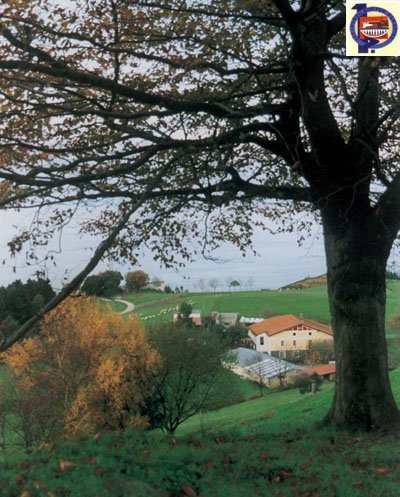
Our Own Land
There is no one in the world more tearless,
more proud, more simple than us.
1922
We don't wear it in sacred amulets on our chests.
We don't compose hysterical poems about it.
It does not disturb out bitter dream-sleep.
It doesn't seem to be the promised paradise.
We don't make of it a soul
object for sale and barter,
and we being sick, poverty-stricken, unable to utter a word
don't even remember about it.
Yes, for us it's mud on galoshes,
for us it's crunch on teeth,
and we mill, mess and crush
that dust and ashes
that is not mixed up in anything.
But we'll lie in it and be it,
that's why, so freely, we call it our own.
Leningrad, 1961
ANNA AKHMATOVA
Saturday, November 19, 2005

Sunday, November 13, 2005
1421

On 8 March 1421, the largest fleet the world had ever seen set sail from China. The ships, some nearly five hundred feet long, were under the command of Emperor Zhu Di's loyaul eunuch admirals. Their orders were "to proceed all the way to the end of the earth".
The voyage would last for two years and by the time the fleet returned, China was beginning its long, self-imposed isolation from the world it had so recently embraced. And so the great ships were left to rot, and the records of their journey destroyed. And with them, the knowledge that the Chinese had circumnavigated the globe a century before Magellan and Elkano, reached America seventy years before Columbus, and Australia three hundred and fifty years before Cook.
More information in: www.1421.tv
Saturday, November 12, 2005
The Saturday Poem
They fuck you up, your mum and dad.
They may not mean to, but they do.
They fill you with the faults they had
And add some extra, just for you.
But they were fucked up in their turn
By fools in old-style hats and coats,
Who half the time were soppy-stern
And half at one another's throats.
Man hands on misery to man.
It deepens like a coastal shelf.
Get out as early as you can,
And don't have any kids yourself.
PHILIP LARKIN
Thursday, November 10, 2005
Remember Saro-Wiwa
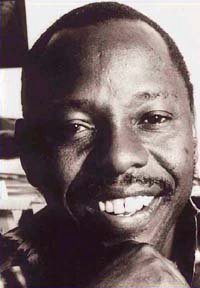
Kenule Beeson Saro-Wiwa (October 10, 1941 - November 10, 1995) was a Nigerian author, television producer and environmental activist.
Ken Saro-Wiwa was a member of the Ogoni, an ethnic minority whose homelands in the Niger Delta have been targeted for oil extraction since the 1950s. As president of the Movement for the Survival of the Ogoni People (MOSOP), Saro-Wiwa led a nonviolent campaign against environmental damage associated with the operations of multinational oil companies, including Shell and British Petroleum.
Saro-Wiwa was also a successful businessman, novelist and television producer. His best known novel, Sozaboy: A Novel in Rotten English, tells the story of naive village boy recruited to the army during the Nigerian civil war (1967-1970). His war diaries, On a Darkling Plain, document Saro-Wiwa's experience during the war, when he served as the Civilian Administrator for the port of Bonny in the Niger Delta. His satirical television series, Basi & Co., is purported to have been the most watched soap opera in Africa.
In the early 1970s, Saro-Wiwa served as the Regional Commissioner for Education in the Rivers State Cabinet, but was dismissed in 1973 because of his support for Ogoni autonomy. In the late 1970s, he established a number of successful business ventures in retail and real-estate, and during the 1980s was able to concentrate on his writing, journalism and television production.
In 1990, Saro-Wiwa founded MOSOP, to advocate for the rights of the Ogoni people. The Ogoni Bill of Rights, written by MOSOP, set out the movement's demands, including increased autonomy for the Ogoni people, a fair share of the proceeds of oil extraction, and remediation of environmental damage to Ogoni lands. In 1992, Saro-Wiwa was imprisoned for several months, without trial, by the Nigerian military government.
In January 1993, MOSOP organised peaceful marches of around 300,000 Ogoni people - more than half of the Ogoni population - through four Ogoni centres, drawing international attention to his people's plight. The same year, Shell ceased operations in the Ogoni region.
Saro-Wiwa was arrested again and detained by Nigerian authorities in June 1993, but was released after a month. In May 1994, he was arrested and accused of incitement to murder following the deaths of four Ogoni elders, believed to be sympathetic to the military. Saro-Wiwa denied the charges, but was imprisoned for over a year before being found guilty and sentenced to death by a specially convened tribunal. The trial was widely criticised by human rights organisations.
On November 10, 1995, Saro-Wiwa and eight other MOSOP leaders were executed (hanged) by the Nigerian military government of General Sani Abacha, provoking the immediate suspension of Nigeria from the Commonwealth of Nations, which was meeting in New Zealand at the time.
A biography, In the Shadow of a Saint, was written by his son, journalist Ken Wiwa. Ken Saro-Wiwa's daugher Zina Saro-Wiwa is a filmmaker and arts journalist.
"I repeat that we all stand before history. I and my colleagues are not the only ones on trial. Shell is on trial here, and it is as well that it is represented by counsel said to be holding a watching brief. The company has, indeed, ducked this particular trial, but its day will surely come and the lessons learned here may prove useful to it, for there is no doubt in my mind that the ecological war the company has waged in the delta will be called to question sooner than later and the crimes of that war be duly punished. The crime of the company's dirty wars against the Ogoni people will also be punished.
On trial also is the Nigerian nation, its present rulers and all those who assist them. I am not one of those who shy away from protesting injustice and oppression, arguing that they are expected of a military regime. The military do not act alone. They are supported by a gaggle of politicians, lawyers, judges, academics and businessmen, all of them hiding under the claim that they are only doing their duty, men and women too afraid to wash their pants of their urine.
We all stand on trial, my lord, for by our actions we have denigrated our country and jeopardised the future of our children. As we subscribe to the subnormal and accept double standards, as we lie and cheat openly, as we protect injustice and oppression, we empty our classrooms, degrade our hospitals, and make ourselves the slaves of those who subscribe to higher standards, who pursue the truth, and honour justice, freedom and hard work."
My brothers
My brothers,
and sisters
dance, dance, dance, dance
dance your anger
and your joys
dance the military guns to silence...
dance, my people
for we have seen tomorrow
and there is
anOgoni
star in the sky.
Wednesday, November 09, 2005
The Spanish Inquisition
Inquisitorial campaign not over yet
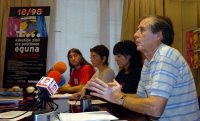
With court case 18/98 due to start in Madrid on November 21st against 59 Basque citizens representing a wide range of social and political entities, the grass-roots campaign in support of the victims of this political witch hunt is warning that the Spanish law courts' offensive is not over yet.
Speaking on Tuesday, lehendakari Ibarretxe dismissed the recent trial in Bilbao against Juan María Atutxa, Gorka Knörr and Kontxi Bilbao [Gara English Weekly, October 26] as 'the tail of the comet launched by the PP [the right-wing party ruling in Spain until last year's elections] in the courts'.
Teresa Toda, speaking for the 18/98+ platform, disagrees emphatically. She believes the worst of Spain's inquisitorial strategy against Basque activists, set in motion by former president Jose María Aznar, is yet to come:
'The head of that comet, which denies the rights of individuals and of the entire Basque society, is still alive and society should be very aware of that fact, because while some talk about 'the tail end of the comet' we haven't had the head yet, and its about to crash down on Euskal Herria,' she warned.
Toda was speaking in Bilbao in an appearance with other members of the 18/98+ campaign who had met to assess the Kaiera campaign.
Mariano Ferrer, a popular retired journalist and supporter of the campaign, said that the different court cases included in the 18/98 macro-trial 'hold no water', which is why, in his opinion, 'they are having such a hard time getting the court trials started'.
'Eight years have passed since judge Baltasar Garzón had the [Basque newspaper] Egin shut down, and that trial still hasn't come up,' Ferrer pointed out.
According to the veteran current affairs analyst, these trials amount to rights violations: 'They represent a distortion of the justice system in any state subject to the rule of law, because these are politically motivated trials with a specific goal, in a well-defined political climate, which do not merely threaten but actually nullify the civil and political rights of individuals, businesses and a variety of entities.'
But, he said, such violations do not only affect those directly accused in the trials themselves but 'affect us all, because in a democratic society rights are indivisible; when a right is threatened and nothing is done to defend it, it is always a step backwards.'
Sunday, November 06, 2005
The Sun Survey
Clearly is easier to read the text but I wonder if the old black background was more stylish and suited better to my poetry-driven face...
Could my loyal 3 or 4 readers please place a comment making clear which is your choice?
One coffee One vote!
Popular democracy!
Power to the masses!
Etc!
Saturday, November 05, 2005
The Sat Poem
Wednesday, October 26, 2005
The Wed Joke
A CHRISTIAN DEMOCRAT: You have two cows. You keep one and give one to your neighbor.
A SOCIALIST: You have two cows. The government takes one and gives it to your neighbor.
AN AMERICAN REPUBLICAN: You have two cows. Your neighbor has none. So what?
AN AMERICAN DEMOCRAT: You have two cows. Your neighbor has none. You feel guilty for being successful. You vote people into office who tax your cows, forcing you to sell one to raise money to pay the tax. The people you voted for then take the tax money and buy a cow and give it to your neighbor. You feel righteous.
A COMMUNIST: You have two cows. The government seizes both and provides you with milk.
A FASCIST: You have two cows. The government seizes both and sells you the milk. You join the underground and start a campaign of sabotage.
DEMOCRACY, AMERICAN STYLE: You have two cows. The government taxes you to the point you have to sell both to support a man in a foreign country who has only one cow, which was a gift from your government.
CAPITALISM, AMERICAN STYLE: You have two cows. You sell one, buy a bull, and build a herd of cows.
BUREAUCRACY, AMERICAN STYLE: You have two cows. The government takes them both, shoots one, milks the other, pays you for the milk, then pours the milk down the drain.
AN AMERICAN CORPORATION: You have two cows. You sell one, and force the other to produce the milk of four cows. You are surprised when the cow drops dead.
A FRENCH CORPORATION: You have two cows. You go on strike because you want three cows.
A JAPANESE CORPORATION: You have two cows. You redesign them so they are one-tenth the size of an ordinary cow and produce twenty times the milk. You then create clever cow cartoon images called Cowkimon and market them World-Wide.
A GERMAN CORPORATION: You have two cows. You reengineer them so they live for 100 years, eat once a month, and milk themselves.
A BRITISH CORPORATION: You have two cows. They are mad. They die. Pass the shepherd's pie, please.
AN ITALIAN CORPORATION: You have two cows, but you don't know where they are. You break for lunch.
A RUSSIAN CORPORATION: You have two cows. You count them and learn you have five cows. You count them again and learn you have 42 cows. You count them again and learn you have 12 cows. You stop counting cows and open another bottle of vodka.
A SWISS CORPORATION: You have 5000 cows, none of which belong to you. You charge others for storing them.
A BRAZILIAN CORPORATION: You have two cows. You enter into a partnership with an American corporation. Soon you have 1000 cows and the American corporation declares bankruptcy.
AN INDIAN CORPORATION: You have two cows. You worship both of them.
A CHINESE CORPORATION: You have two cows. You have 300 people milking them. You claim full employment, high bovine productivity, and arrest the newsman who reported on them.
AN ISRAELI CORPORATION: There are these two Jewish cows, right? They open a milk factory, an ice cream store, and then sell the movie rights. They send their calves to Harvard to become doctors. So, who needs people?
AN ARKANSAS CORPORATION: You have two cows. That one on the left is kinda cute.
Saturday, October 22, 2005
The Sat Poem
Sand the most anonymous of soils,
of sand the pillars of un-paradise are made.
And the air of planet Earth
is made of sand,
of sand the satellites;
Uranus
and Venus too
all sand.
Hearts expel sand
and draw it in. Sand.
But not only sand.
Along with the sand, the essential tear
and a glass full of blood.And there, too, amongst the blood,
yellowing letters,
broken clocks,
a Lilliputian dictionary,
a rusty shield of Sparta
-they all come too.
But in the evening, everything fades away,
as do you and the light.
Each night all that remains is sand
beneath the cruel moonlight. Sand.
Sand the most anonymous of soils,
Of sand the pillars of un-paradise are made.
by Bernardo Atxaga
Poemas & Híbridos (Visor, 1993). Translated by Margaret Jull Costa.
Closing the Cybergap
He hatched the idea after seeing children in a Cambodian village benefit from having a notebook PC donated by a charity. He hopes to get up to 15 million machines in production within a year.
Countries like Brazil, China and Thailand are already interested in the project.
Friday, October 21, 2005
Did you know that...? (II)
12. The world's trade in illegal drugs is estimated to be worth around $400 billion - about the same as the world's legal pharmaceutical industry.
13. Landsmines kill or maim at least one person every hour.
14. There are 44 million child labourers in India.
15. People in industrialised countries eat between six and seven kilograms of food additives every year.
16. The golfer Tiger Woods is the world's highest-paid sprtsman. He earns $78 million a year - or $148 every second.
17. There are 67,000 people employed in the lobbying industry in Washington DC - 125 for each elected member of Congress.
18. Cars kill two people every minute.
19. More people can identify the golden arches of McDonald's than the Christian cross.
20. In Kenya, bribery payments make up a third of the average household budget.
Thursday, October 20, 2005
24 Oct 1975

Was a Friday and 90% of Iceland's women went on strike that day.
They were fed up of earning less than the average men and they organized a strike that, later, officially, was called a "day off".
Women left home early in the morning and went back late in the evening. They spent that day gathering, smoking more than in a normal day, drinking coffee and going down to the capital city Reykjavik for the bigest demo the country has ever seen: 25,000 marchers out of a population of 220,000.
It was a spur to action and many feel that the solidarity women showed that day paved the way for the election five years later of Vigdis Finnbogadottir, the world's first democratically elected female president.
But 30 years later there is also a feeling of disillusionment.
A statistic shows that Icelandic women earn on average only 64.15% of men's wages.
So next Monday, on the rally's 30th anniversary, women are being encouraged to leave work at 2.08pm, the time by which they would have earned their pay if they were earning the same as men.
Wednesday, October 19, 2005
Chomsky
Here is the top five from the poll:
1. Noam Chomsky
Linguistics expert and critic of US foreign policy.
2. Umberto Eco
Italian writer and academic.
3. Richard Dawkins
Oxford professor of public understanding of science.
4. Vaclav Havel
Playwright and leader of Czech velvet revolution.
5. Christopher Hitchens
Journalist, author, pro-Iraq war polemicist.
Tuesday, October 18, 2005
Transcript
Visit it, is a cool web:
http://www.transcript-review.org/old_issues.cfm?lan=en
Sunday, October 16, 2005
The Sunday Joke
The American says "What's a shortage?"
The Russian says, "What's meat?"
The Chinese chap says, "What is an opinion?"
and the Israeli asks: "What is 'excuse me'?"
Saturday, October 15, 2005
The Saturday Poem
The old land swinging in her stomach
she must get to know this language
better - key words, sound patterns
wordgroups of fire and blood.
Try your classmates with
the English version of your name.
Maria. Try it.
Good afternoon. How are you?
I am fine. Your country -
you see it in a drop of water.
The last lesson they taught you there
was how to use a gun.
And now in stops and starts
you grow a second city in your head.
It is Christmas in this school.
Sarajevo is falling through
a forest of lit-up trees,
cards and decorations.
Mountains split with gunfire
swallow clouds, birds, sky.
MONIZA ALVI
Tuesday, October 11, 2005
The Fab Four
I love British newspapers. I really do. You see in them a rare effort of independence towards institutions and political parties that is unthinkable in, say, South Europe. The press in the UK is vibrant and is a genuine democratic counter-balance in the face of the State apparatus, Government, the rich and the influential.
The current tendency in the eyebrow paper field is downsizing. The alleged reasons are practical ones (difficult to use for commuters) and symbolic (linked to an old-fashioned past).
First was the Independent who, with a big fanfare, changed to tabloid size. Then, more quietly, the Times followed. Both stopped the freefall in circulation and also made a bit of profit. The last move was made by the Guardian choosing a halfway size between the broadsheet and the tabloid: the so-called Berliner format. The Berliner is a quite “continental” shape, similar to those papers in France and Germany. The fourth broadsheet, the Telegraph, is going to launch a shake-up next week: they are going to keep the current size but will change the sections distribution, focusing in news, sports – in a tabloid supplement, curiously – and finances “told in a sporty way” according to editor Martin Newland.
So what’s the future for those serious papers market? It seems that the size changing was necessary in order to stop the bleeding and to attract few new readers but ultimately is the Internet, with its free electronic version papers, which is shaping the market.
Will the Internet make disappear the papers as the apocalyptic version says? I doubt it very much. Remember that the creation of the photo camera wasn’t the end of painting as many thought. On the contrary, it pushed for the genesis of abstract painting, a key artistic movement to understand the 20th century.
Monday, October 10, 2005
Dubya The Ape
George W. Bush
He is in the Oval Office getting the daily sit-rep on Iraq.
Rumsfeld says: "I have to tell you, Mr President, that yesterday three Brazilian soldiers were killed".
To his surprise Bush groans and buries his head in his hands, saying over and over, "That is just terrible, terrible news.
"Remind me again, just how many is a brazillion?"
Sunday, October 09, 2005
Spectacles and Sideburns

Atxaga on Ordorika
Towards 1970 there began to materialise the Basque City. Never before had the noun and the adjective joined together. One spoke of the Mountain, the Earth, the Nation, all of them Basque; but the privileged space where the world became truly wide seemed forbidden to those who whished to express themselves in the language that sustains the adjective, the Basque tongue. It was as if someone, the Spirit of the Time, for example, might have hurled out an order: "Either change your language, or change your place". Which in the case of Ruper Ordorika, meant: "Dear friend, either devote yourself to romantic music or to patriotic music. And if not, give it up". The message was clear. It meant solitude. And it was a curse. A snare.
Ruper Ordorika put up with the solitude, and against the long road he opposed his will and his intelligence. Ruper Ordorika forgot the curse: from his first records, his materials was diverse, general, non-religious: he could do with the laundry, a van, or a visit from a woman. Ruper Ordorika eluded the snare: instead of crossing to the other side of the border, he remained close to it and took on its history. He didn't become the chamaleon of the storybook tale, neither in a branch of the General Bank of Music, nor in the international Basque Singer for Tourists. He remained a personal creator, with committed lyrics and music towards his loved, hated, distant, close Basque City.
Saturday, October 08, 2005
Too Old, Too Small, Maybe

THE TREASURE MAP: LIKE A FOREWORD
The Saturday Poem
It began to snow at midnight. And certainly
the kitchen is the best place to sit,
even the kitchen of the slepless.
It's warm there, you cook yourself something, drink wine
and look out of the window at your friend eternity.
Why care wether birth and death are merely points
when life is not a straight line.
Why torment yourself eyeing the calendar
and wondering what is at stake.
Why confess you don't have the money
to buy Saskia shoes?
And why brag
that you suffer more than others.
If there were no silence here
the snow would have dreamed it up.
You are alone.
Spare the gestures. Nothing for show.
by Vladimir Holan
Friday, October 07, 2005
Golden Pages
Thursday, October 06, 2005
Ten Languages Die Out Every Year
Imagine, just for a moment, that you are the last native speaker of English. No one else you know speaks your language. You don’t see any point in teaching it to your kids, because no one will ever speak it to them, either. Imagine the loss you would feel. All those un-translatable English-language ideas – a stiff upper lip, a stitch in time, a New York minute – would disappear. No one would ever sing “baa baa black sheep” or “ring-a-ring o’roses” again. All those minute clues about history, culture, collective memory – all gone.
There are around 6,000 living languages in the world – and at least half of those are under serious threat. In every part of the world, languages are disappearing. In fact, one scientist has said that languages are facing a bigger risk of extinction than birds and mammals. Professor Steve Sutherland of the University of East Anglia calculated that the past 500 years have seen 4.5 per cent of languages die out – compared with 1.3 per cent of birds, and 1.9 per cent of mammals.
Some 300 languages have more than a million speakers. They’re the healthy ones – Mandarin Chinese, English and Spanish are the most widely spoken. Ten major languages are the mother tongues of almost half the world’s population. But the median size for languages in the world is just 6,000 – so half the languages in the world are spoken by that number or fewer.
Languages, like so many other forms of human expression, come and go, and thousands have done exactly that without leaving any trace of ever having existed. Only a very few – Basque, Greek, Hebrew, Latin among them – have lasted more than 2,000 years. But it seems that the pace of their disappearance is becoming ever quicker. UNESCO claims that the rate of language extinction has now reached ten every year.
The Ethnologue, a database of all the languages spoken in the world, claims that 417 languages are spoken by so few people that they are in the final stages of becoming extinct. Spare a thought for the one living speaker of Luo in Cameroon, the single remaining exponent of Klamath in Oregon, the handful of people that speak the Saami Pite language in Sweden and Norway.
Where once languages flourished in small isolated areas, there are now very few that are not in regular contact with the rest of the world. Speaking an internationally recognised language is a clear advantage for people who want to make the most of the opportunities contact brings. Eventually, people may not realise their children are not learning their native tongue.
Languages may also be lost through migration, as people move from small rural communities to urban centres, or when environments are destroyed by the search for oil or timber. Natural disasters can also devastate populations, and along with them, their language – like the speakers of the Paulohi language in Makulu, Indonesia, of whom all but 50 were killed by an earthquake and tidal wave.
Governments also have a case to answer in the extinction of languages. The perceived need to establish “official languages”, in which a country would educate its children, conducts its political affairs and carry out its business, had a disastrous effect on many small languages. Up until the 1970s, Aborigines in Australia were forbidden to speak in their own tongues – which once numbered more than 400. Now, according to the Atlas of the World’s Languages in Danger of Disappearing, only about 25 Aboriginal languages are still commonly spoken.
What is lost if a language is lost?
There are some who argue that the extinction of languages is merely a symptom of the gradual evolution of our species, where universal communication is prized, and increasing homogeneity is just an evolutionary side-effect. Obviously there could be great benefits if everyone in the world spoke the same language – some industries already reflect this, with English a must for pilots and air traffic controllers. But it’s clear that there is far more at stake than mere convenience. As languages are lost, whole ways of life and sets of knowledge may be lost along with them. Complex religious and social rituals disappear, oral histories die through lack of telling. Information about plants, animals and environments gathered through generations may never be passed on. And the richness of human invention, our unique gift of talking about what we see around us, would be much the poorer.
Put simply, language expresses something about identity, about our place in the world. Ani Rauhihi, a Maori teacher in New Zealand’s North island, sums it up: “If you grow up not speaking your language, you won’t know who you are”.
The need for a feeling of identity and connection to one’s past is a big factor in the resurgence of the Maori language. Maori is the language of New Zealand’s native population and was the predominant language spoken there before the arrival of the European settlers. But by the early 20th century children were punished for speaking Maori at school and very few schools taught the language. By the 1980s less than 20 per cent of Maori knew enough of the language to be regarded as native speakers, and many urbanised Maori people had no contact at all with their language and culture. Now one in four Maori people in New Zealand speaks the Maori language and around 40% of Maori pre-schoolers are enrolled in total-immersion schools. Maori is also an official language.
It is even possible for a language considered dead to be revived into a flourishing and dynamic tongue. Hebrew ceased to be used as spoken language in about AD 200, but continued to be used by Jews as a “sacred tongue”. In the late 19th century, a revival movement headed by Eliezer Ben-Yehuda aimed t re-establish Hebrew as a spoken language to provide a common tongue for Jews. The new language came to be a key factor in the Zionist movement, so that when Jews moved back to their homeland they would have a common language. Ben-Yehuda coined thousands of new words and pioneered Hebrew usage in home and school. Now Hebrew is spoken by more than 5 million people, 81 per cent of Israel’s population.
It seems the world may be starting to realise what is about to lose. UNESCO is actively promoting multilingualism and the need to preserve intangible aspects of culture as well as the more traditional monuments and national parks. Joseph Poth, head of its languages division, has spoken of the need for “trilingualism” – we should all speak our mother tongue, a “neighbour” language and an international language. Even teaching an endangered language in schools creates a rescue system, he says.
It may be too late for the languages where only a few speakers remain. Chances are they’re elderly, they speak their mother tongue very little and have forgotten many of the words they once knew. But it seems that at last the value of these languages is being recognised, and that is the first step to stemming the tide of loss.
From "50 Facts That Should Change The World"
by Jessica Williams. Icon Books.
Pages 171-174.
Wednesday, October 05, 2005
"Obabakoak"

by Bernardo Atxaga (right)
This novel is a unique literary event: a fresh and original voice from the Basque nation, one of the world's most isolated cultures. Already published in all of Europe's main languages, English readers will now see why Obabakoak was a literary sensation throughout Europe.
The title of the book means "events that happenned in Obaba", and Obaba is the village at the centre of this novel composed of linked tales and parodies written with a delicate sense of childlike innocence - as though Borges were writing about ordinary people.
A man relates in his diary the beautiful deception practised on him by his father many years before. A young woman teacher, friendless and lonely, makes a passionate mistake. A boy is transformed into a wild boar. Two friends tell each other stories while trying to solve the mistery of a chilhood photograph: can a lizard slip into your ear and eat your brain, so that memory and creativity are destroyed?
Gradually, we realize that there is a darker theme beneath these jokey and sad stories of loss, of events in a small mysterious land. All the good stories seem already to have been written, and the narrator of the book becomes a victim of his own tales and his "search for the lost word" that will give meaning to them.
PROLOGUE
(The author speaks of his language, euskera)
I write in a strange language. Its verbs,
the structure of its relative clauses,
the words it uses to designate ancient things
- rivers, plants, birds -
have no sisters anywhere on Earth.
A house is etxe, a bee erle, death heriotz.
The sun of the long winters we call eguzki or eki;
the sun of the sweet, rainy springs is also
- as you'd expect - called eguzki or eki
(it's a strange language but not that strange).
Born, they say, in the megalithic age,
it survived, this stubborn language, by withdrawing,
by hiding away like a hedgehog in a place,
which, thanks to the traces it left behind there,
the world named the Basque Country or Euskal Herria.
Yet its isolation could never have been absolute
- cat is katu, pipe is pipa, logic is lojika -
rather, as the prince of detectives would have said,
the hedgehog, my dear Watson, crept out its hiding place
(to visit, above all, Rome and all its progeny).
The language of a tiny nation, so small
you cannot even find it on the map,
it never strolled in the gardens of the Court
or past the marble statues of government buildings;
in four centuries it produced only a hundred books...
the first in 1545; the most important in 1643;
the Calvinist New Testament in 1571;
the complete Catholic Bible around 1860.
Its sleep was long, its bibliography brief
but in the twentieth century the hedgehog awoke.
Obabakoak, this book published now in this city,
the city of Dickens, of Wilkie Collins and of so many others,
is one of the latest books to join the Basque bibliography.
It was written in several houses and in several countries,
and its subject is simply life in general.
And Obaba is just Obaba: a place, a setting;
ko means "of"; a is a determiner; k the plural.
The literal translation: The People or Things of Obaba;
a less literal translation: Stories from Obaba
(and with that I conclude this prologue).
BIOGRAPHY
Bernardo Atxaga (real name Jose Irazu) was born in Asteasu, Gipuzkoa, Basque Country, in 1951. Studied economics in Bilbao and Barcelona and since the early 70s is a full time writer. Obabakoak won the Spanish national literary award in 1989 and sice then has been translated into 20 languages. Atxaga has been member of literary groups like Pott and publisher of literary magazines like Gartziarena.
Obabakoak (a novel)
by Bernardo Atxaga.
Translated by Margaret Jull Costa
Published by Hutchinson, London.
326 pages
Tuesday, October 04, 2005
Katrina & Rita
I, Too
I, too, sing America.
I am the darker brother.
They send me to eat in the kitchen
When company comes,
But I laugh,
And eat well,
And grow strong.
Tomorrow,
I'll be at the table
When company comes.
Nobody'll dare
Say to me,
"Eat in the kitchen,"
Then.
Besides,
They'll see how beautiful I am
And be ashamed -
I, too, am America.
by LANGSTON HUGHES
Saturday, October 01, 2005
The Saturday Poem
So early it's still almost dark out.
I'm near the window with coffee,
and the usual early morning stuff
that passes for thought.
When I see the boy and his friend
walking up the road
to deliver the newspaper.
They wear caps and sweaters,
and one boy has a bag over his shoulder.
They are so happy
they aren't saying anything, these boys.
I think if they could, they would take
each other's arm.
It's early in the morning,
and they are doing this thing together.
They come on, slowly.
The sky is taking on light,
though the moon still hangs pale over the water.
Such beauty that for a minute
death and ambition, even love,
doesn't enter into this.
Happiness. It comes on
unexpectedly. And goes beyond, really,
any early morning talk about it.
by Raymond Carver